home » blog »

Dried plums bear fruit yet again for bone health

For a few years now I have been reporting the studies from Dr. Arjmandi and colleagues suggesting that dried plums have a special bone building effect. And, with the results of a new study, Dr. Arjmandi says, “Over my career, I have tested numerous fruits, including figs, dates, strawberries, and raisins, and none of them come anywhere close to having the effect on bone density that dried plums, or prunes, have.”

In the latest work, Dr. Arjmandi and his research group published data from a year-long trial with 100 post-menopausal women comparing the effect of 100 grams of dried apple with 100 grams of dried plums (that’s 10-12 prunes, if you’re counting!). While both fruits had bone-protective effects, the plums had significantly more pronounced effects on bone density of the spine and forearm. And, as would be expected, the markers of bone breakdown decreased most significantly and consistently in the dried plum group.

And do we know anything new about why dried plums maintain and build bone? Well, it is probably at least partially due to the fact that dried plums are high in bone-building vitamins C and K, boron, potassium and potent antioxidant compounds.
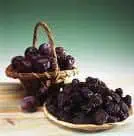
This study also notes a new finding showing that prune consumption leads to a reduction in C-reactive protein (CRP), which is a marker of inflammation. Lower CRP is a good thing as this means there is less inflammation in the body as a whole. High C-reactive protein, on the other hand, is linked to a number of chronic diseases, including osteoporosis. In fact, a growing body of literature suggests osteoporosis involves an inflammatory response where the body is tearing down old tissue at a much higher rate than it is building new tissue. High antioxidant intake, including the powerful antioxidants from prunes, reduces inflammation.

For those considering adding prunes to their diet, the consumption of 10-12 prunes a day did not lead to any significant weight gain. Also, if you’re following an alkaline diet, you may wonder how prunes fit into the mix. It’s true, prunes are slightly acid-forming, but remember that an alkaline diet is about balancing acid-forming foods with alkaline-forming foods. It’s okay to eat some acid-forming foods as long as the majority of your diet is alkaline. And when the bone-building benefits of the food are as great as they are with prunes, it’s clearly worth the trade-off!

So, if you like prunes, work them into your healthy diet. Wonderful organic prunes are available from California. I like them soaked or stewed a bit, and for the sociability factor, it is always wise to spread them out over a day, taking a few each meal rather than eating them all at once.


Reference:
Hooshmand, et al, “Comparative effects of dried plum and dried apples on bone in postmenopausal women”.  British Jr. of Nutrition (2011) pages 1-8

We created the Osteo Blast blog as our forum to express opinions and educate the public about natural means of supporting and improving bone health and overall wellness. As part of this forum, we sometimes discuss medical issues and medications, and their effects on bone health in general. However, we cannot advise readers about specific medical issues in this forum. If you wish to obtain advice from Susan E. Brown, PhD, about your specific bone health and nutritional concerns, please visit our Consultations page. Other specific medical questions should be referred to your healthcare provider.

Comments

October 19. 2011 14:55

I wonder if plums (non-dried) would work the same way.

Minna Walsh

October 19. 2011 14:56

I have read that dried fruits are really high in fructose and that
a persons fructose intake should be limited?
How does this fit in?

Sumpter

October 19. 2011 15:02

Don't prunes act as a laxative?  How can one eat this many prunes everyday and not spend all their time in the bathroom?

Linda

October 19. 2011 15:08

Ditto on Linda's comment.  I'd think I'd be in the bathroom 24/7??  Thx.

Andrea

October 19. 2011 15:16

I wonder if the body will get addicted to the laxative effect. I remember my mother-in-law was religious in taking stewed prunes with her breakfast. However, if she skipped a day, there was trouble.
Any research on this?

Yvonne Tasker-Rothenberg

October 19. 2011 16:01

Minnie, the studies have only examined prunes. There's no information on whether plums do the same thing.

Sumpter, some dried fruits are high in fructose and have a high glycemic index -- that is, they break down easily and quickly into glucose and raise a person's blood sugar. Most of the people who say "avoid fructose" do so because of concern about the glycemic response. Prunes' high fiber content dampens that fast breakdown effect such that prunes don't have a high glycemic index, so there's much less concern about that problem.

Linda, Andrea, and Yvonne,
The laxative effect is related to prunes' high fiber content, and if you do not have adequate fiber in your diet -- and most people don't -- they will put you on the throne, so to speak. But you don't have to start with a great many all at once. Start slowly, with just one or two a day, and work your way up to tolerance. You would need to do that with any source of fiber.

Managing Editor

October 19. 2011 16:30

Hi I read the info and research on plums when you first published it. I have always loved prunes and this was the best excuse to eat them as I also had osteoporosis! I probably eat at least 9 a day, sometimes more. They have not changed my bowel habits ( still twice a day) and I hope that the next DEXA scan will see more more significant changes (back exercises have improved my spine from -2.9 to -2.6 no medication! I have also added 4000units of Vit D3 in winter so hopefully more good news next year!

Jennie

October 19. 2011 17:34

I have been eating 10 prunes a day during the last one and a half year. My bone density decreased from -3 to -3,5 in my spine.
Very disappointing.

Jo

jo

October 20. 2011 01:40

I got really excited when I read one of your other posts about prunes.  However, I did some further internet research on them and found that there is some scientific evidence that says that for people who have a propensitiy for cancer, eating prunes everyday may not be such a good idea, as it can increase their changes of getting cancer.  Can you addresss this?

Ellen

October 20. 2011 11:53

Is it necessary to eat 10-12 to get the benefit?  I have Irritable Bowel Syndrome as well as osteoporosis.  Taking one packet per day of the Better Bones Builder is all my body can handle without suffering cramps and diarrhea (due to the high magnesium content?).  Since I have trouble digesting fresh fruit (except banana), I eat some dried fruit each day (some raisins, a couple of figs, apricots)but that seems to be all I can handle.  How are figs and apricots re raising glucose levels?  Thanks!

Sabrina Falls

October 20. 2011 15:18

Any word on the efficacy of prune juice?

Leigh

October 21. 2011 09:39

Jo, if you're continuing to lose bone even when you're taking steps to support your bone health, that's a signal that there's something causing your bone loss. If you have an underlying condition contributing to bone loss, just using prunes is not going to put a halt to it -- you will need to uncover and address that condition. Have you asked your physician to test you for health issues that could be causing you to lose bone? Dr. Brown has a list of the medical diagnostic tests that she feels are most likely to uncover health issues here: http://www.betterbones.com/bonehealth/medicaltestingforosteoporosis.aspx, and this article here: http://www.betterbones.com/osteoporosis/secondaryosteoporosis.aspx offers a comprehensive list of conditions that could contribute to ongoing bone loss.

If you would like some guidance or assistance, remember that Dr. Brown herself offers consultations in person or by phone. See the "Personal Consultations" link at the top of the page.

Managing Editor

October 30. 2011 18:22

I have some serious questions about this study. I obtained the manuscript you cited, and noticed that in the paper they report the initial T scores, but no further ones (see Table 2)! There is one graph (Figure 2) that presents bone density results, but the y axis is labelled as "BMD changes from baseline" and they are all less than one. So the bone density did not improve over the course of a year (or the ratio would be greater than one). The patients consuming prunes lost less bone than those eating apples, particularly in the ulna but this is not the same as saying their bone density increased! It just says they lost a little less on prunes than on apples. And there is no control group in this study! Can you look into why they do not report the T scores in Table 2? I don't have anything against prunes, but this seems to be an attempt to give women false hope that their bone density will increase after following a year of 10-12 prunes. Can you please research this further for us?

emmie

October 31. 2011 23:04

How about dried Figs? Figs are rich in fiber, potassium,calcium and magnecium. Calcium and potassium are much higher than dried prunes.
I eat fresh figs in the season and dried ones in winter.

mariko

November 7. 2011 14:32

Dear Mariko,  No studies on figs to date.  Best wishes, Susan

Dear Emmie:  I have written the study authors asking why they did not list the spinal BMD changes at 12 months in Table 2.  They do, however, state that they found a significantly greater increase in BMD on the prunes than the apples.  The control group they had was on apples and they also saw some benefit, but not as much as the prune group.  I agree that the study could have shown stronger results and would not suggest anyone depend solely on prunes to build bone mass.
Best wishes, Susan Brown

Susan E Brown

Add comment


Loading


Recent Posts