
Most people think bone strength is all about calcium. But bone does not begin as stone. It begins as collagen — the living protein framework that gives bone flexibility, resilience, and structure. And this is where silicon comes in.
According to emerging research, silicon may be one of the most important and most overlooked nutrients for healthy bone formation because it appears to support both new bone building and healthy bone preservation.
Silicon appears to do both.
1. Silicon Supports Osteoblast Bone-Building Cells
Soluble silica has been shown to enhance osteoblast activity — these are the cells that build new bone.
In research models, this enhancement increased collagen synthesis, and collagen is the protein that provides flexibility and tensile strength to bone, skin, ligaments, and connective tissue.
That matters because before bone mineralizes, before calcium crystallizes, the body first builds a soft collagen scaffold known as osteoid.
If that framework is weak, the final mineralized bone is never as strong as it could be.
2. Silicon Helps Slow Bone Breakdown
Silicon also appears to help protect bone by reducing excessive resorption.
Researchers concluded that silicon interacts with inter- and intra-cellular signaling pathways and directly inhibits osteoclast formation and bone resorption.
That gives silicon a rare dual role in bone remodeling:
- It helps stimulate the cells that build bone.
- It helps calm the processes that break bone down.
Not too shabby for a trace mineral most people rarely hear about.
Silicon: The Matrix Intelligence Mineral
Dr. Brown’s newest way of framing silicon is elegant and memorable:
silicon is the matrix intelligence mineral.
Why? Because bone does not start as a mineral block. It starts as an intelligently organized protein matrix.
Silicon appears to help support the architecture of that matrix before it hardens.
The bioavailable form of silicon in the body is called orthosilicic acid.
Research in osteopenic women found that 6–12 mg per day of elemental silicon, provided as choline-stabilized orthosilicic acid, increased P1NP, a marker of new collagen formation in bone.
In the Better Bones framework, think of it this way:
- Magnesium helps regulate crystal formation.
- Boron supports hormonal signaling and mineral metabolism.
- Silicon helps organize the collagen template on which minerals are later deposited.
In other words, silicon quietly supports the early intelligence of bone structure — long before the bone becomes hard and dense.
Why Collagen Matters So Much in Osteoporosis and Osteopenia
We often hear about bone density, but bone quality matters too.
Bone needs both minerals and matrix.
Calcium may help harden bone, but collagen gives bone the toughness and spring it needs to resist fracture.
This is one reason silicon deserves more attention. By supporting collagen production and the protein structure of bone, silicon may help improve the very framework upon which healthy mineralization depends.
That makes silicon especially relevant for women dealing with osteopenia, osteoporosis, or age-related declines in collagen integrity.
How Much Silicon Do We Typically Get?
While most silicon in the environment is not readily absorbed, some forms found in water, plant foods, and certain beverages are bioavailable.
U.S. intake has been reported to range from roughly 13 mg per day to 62 mg per day, with intakes above 30 mg per day associated with greater bone density.
The problem is that modern food processing strips away much of the silicon that used to be present in traditional diets.
Refined grains may look fluffy and innocent, but nutritionally they can be little pickpockets.
Best Food Sources of Silicon
The most natural way to increase silicon intake is to eat a whole-food, plant-rich diet that emphasizes minimally processed foods.
Whole Grains
Silicon is concentrated in the fiber-rich outer parts of grains, which means refining removes much of it.
- Oats
- Bran
- Whole grain bread
- Brown rice
Vegetables
- Green beans
- Spinach
- Lettuce
- Potatoes with the skin
- Carrots
- Beets
- Other root vegetables
Fruits
- Bananas
- Raisins
- Oranges
- Strawberries
Drinks
- Mineral water
- Beer
- Red wine
- Cooked horsetail grass herbal tea
As always, context matters. We are talking about whole-diet patterns here, not handing out hall passes for a nightly “bone-building merlot experiment.”
The Alkaline for Life Approach Naturally Supports Silicon Intake
All this talk of vegetables, fruits, and whole grains sound familiar?
It should.
These are the same foundational foods emphasized in the Alkaline for Life® eating program and throughout the Better Bones philosophy:
- Abundant vegetables and fruits
- Nuts and seeds
- Whole, minimally refined foods
- Adequate clean protein
- Mineral-rich dietary patterns that help support acid-alkaline balance
Dr. Brown also recommends testing first-morning urine pH as a practical way to gauge whether your diet is supplying enough alkalizing minerals.
A pH-balanced eating pattern is one more way to support the mineral environment that healthy bone rebuilding depends on.
Helpful Product Support for a Mineral-Rich Bone Program
If you want nutritional support alongside a whole-food diet, a good place to start is
Alkaline for Life® Professional Products.
One standout option is
Alkalizing Minerals+ (Daily Multi-Mineral),
which provides a broad spectrum of alkalizing minerals to support bone health and whole-body mineral balance.
For readers specifically interested in the collagen-silicon connection, you may also want to explore
Advanced Collagen Generator,
which features choline-stabilized orthosilicic acid as part of a collagen-supportive strategy.
Related Reading on Better Bones and Alkaline for Life
To go deeper, explore these related articles and resources:
FAQ: Silicon for Bone Health
Is silicon good for bones?
Yes, silicon appears to support bone health by helping stimulate collagen formation, supporting osteoblast function, and reducing excessive bone breakdown.
What is the best form of silicon for bone health?
Orthosilicic acid is considered the bioavailable form of silicon in the body. Supplemental research often focuses on choline-stabilized orthosilicic acid.
Does silicon help collagen in bone?
It appears to. Silicon has been associated with increased collagen synthesis and markers of new collagen formation, which is important because bone begins with a collagen scaffold before it mineralizes.
What foods are high in silicon?
Oats, bran, whole grains, green beans, spinach, lettuce, potatoes with skin, carrots, beets, bananas, raisins, oranges, strawberries, mineral water, and horsetail tea are all notable sources.
Can silicon replace calcium?
No. Silicon and calcium do different jobs. Calcium helps mineralize bone, while silicon appears to support the collagen matrix that gives bone its structure before mineralization.
Why is silicon overlooked in osteoporosis conversations?
Most mainstream conversations focus on calcium and vitamin D, but bone strength depends on a larger network of nutrients. Silicon is one of those quieter nutrients that may play a foundational role in bone quality.
The Better Bones Takeaway
Strong bones are not built by calcium alone.
They are built through an intelligent sequence:
first the body creates the protein matrix,
then it deposits the minerals.
Silicon may be one of the unsung heroes in that process.
By supporting collagen production, helping organize the bone matrix, and slowing bone breakdown, silicon earns its place as one of the key nutrients in a natural bone-building strategy.
Happy whole foods eating.
Ready to Learn the Full Better Bones System?
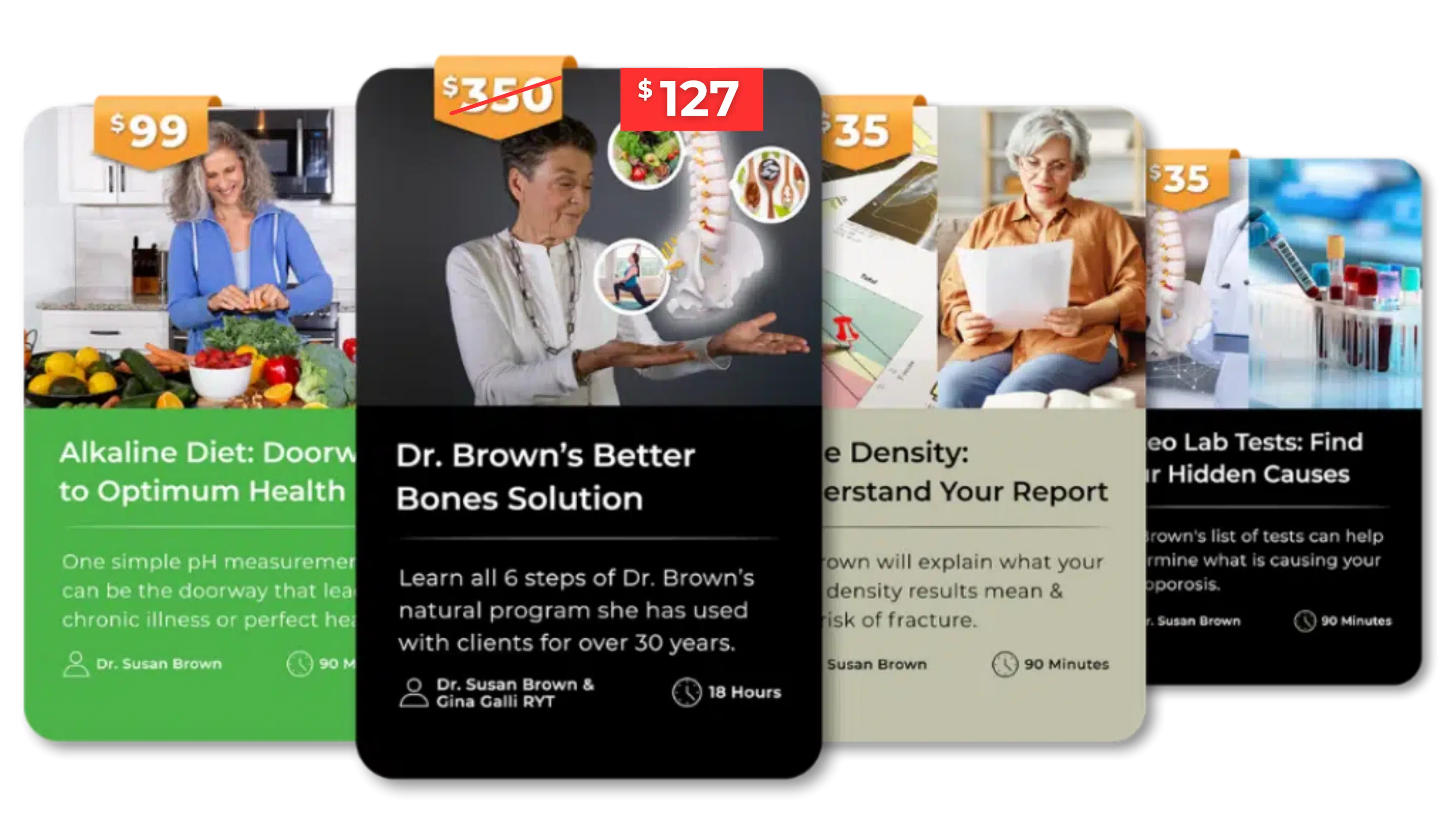
Dr. Susan Brown’s Better Bones Solution Masterclass teaches the principles of building strong bones naturally based on her 40-year career in bone health research and education.
You’ll learn how nutrition, exercise, minerals, lifestyle, digestion, and acid-alkaline balance all work together to support stronger bones.
References
Mladenović, Ž. et al. (2014). Soluble silica inhibits osteoclast formation and bone resorption in vitro. Acta Biomaterialia, 10, 406–418.