
For many years, a popular chorus of wisdom about calcium and bone health has been playing. Its refrain goes something like this: Calcium is essential to bone health. Variations on this theme are also heard. Drink your milk for healthy bones… Take a calcium-based antacid, and it will help your bones while it soothes your stomach… Look, this food, or that one, is fortified with calcium for healthier bones! In the well-known “Got Milk?” campaign, one ad has Superman promising “bones of steel” if you drink milk!
This focus on calcium as the silver bullet for bone health is not entirely restricted to mass media marketing messages. You’ll see calcium emphasized in osteoporosis websites and pamphlets, research reports, and even in the Surgeon General’s bone health recommendations. In our society, where calcium is so widely available and its benefits are so widely known, bone disorders like osteoporosis (fragile bones) and osteopenia (reduced bone mineral density) are still prevalent. Why is this?
The reasons for this paradox fly in the face of popular understanding: bone loss is not caused by low calcium intake. Furthermore, calcium by itself will prevent neither bone loss nor needless osteoporotic fractures.
Bone health depends not so much on calcium intake, but rather on its metabolism and utilization. The major players in this regard are vitamin D, vitamin K, and magnesium — which are woefully under-publicized in the campaign against osteoporosis. This article will discuss these nutrients, and help you understand how critical they are for maintaining bone health.
Calcium’s role in bone health
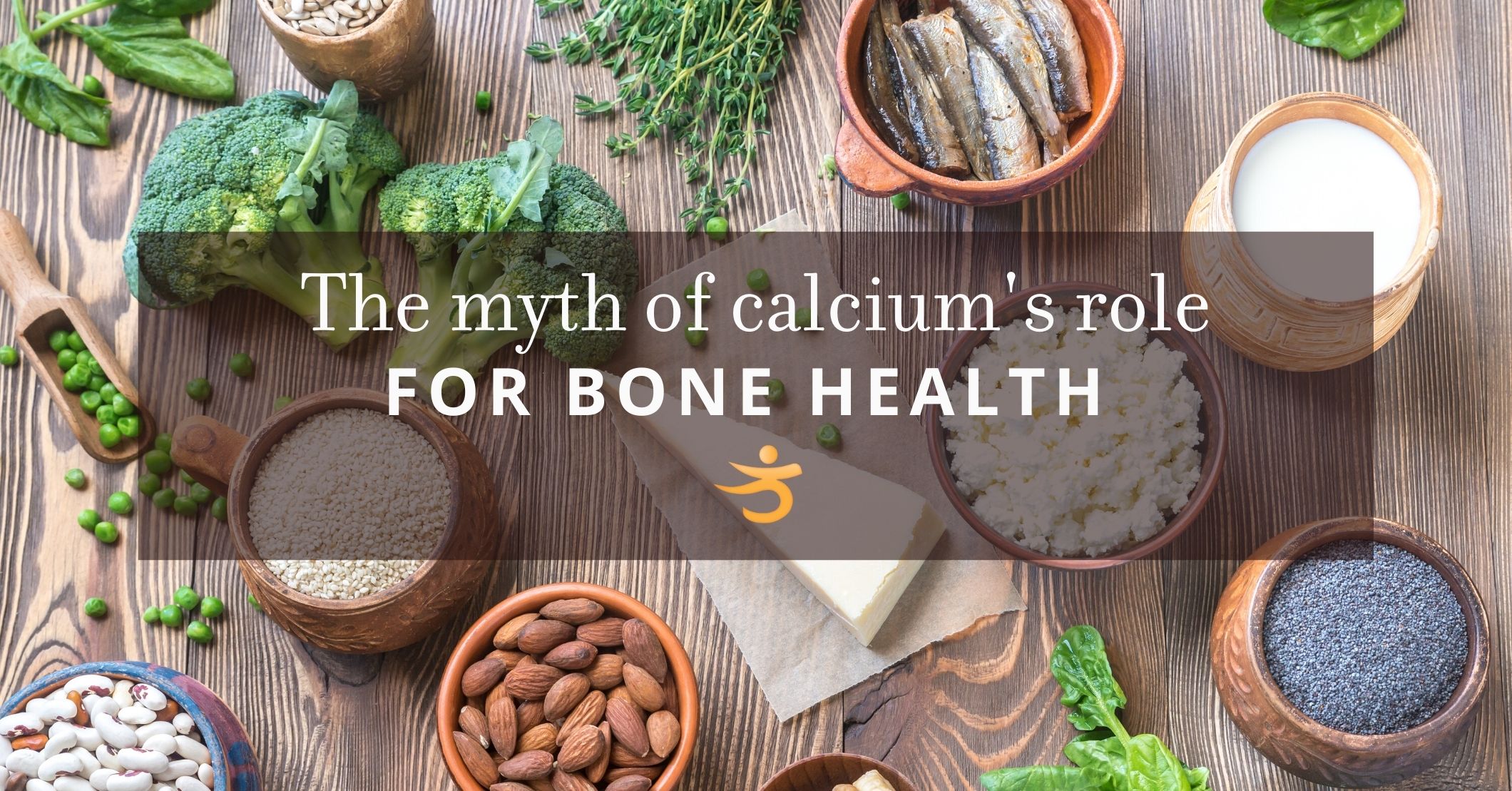
Calcium is the most abundant mineral in the human body and serves several important functions. Two percent of our total body weight is made of calcium, and more than 99% of total body calcium is stored in the bones and teeth, where it supports their structure. The body gets the calcium it needs for everyday, minute-to-minute physiological functioning in two ways. One way is from the intake of calcium-rich foods. Yes, these include dairy products, which have a high concentration per serving of highly absorbable calcium — but also many, many other foods, such as dark, leafy greens, nuts, beans, and seeds, which have varying amounts of highly absorbable calcium. (See table below.)
Good dairy-free sources of dietary calcium
- Whole wheat products
- Vegetables in the brassica family:
broccoli, kale, cabbage, bok choy - Dark leafy greens, e.g., collards, kale, turnip greens, dandelion greens, mustard greens, beet greens
- Canned fish/crustaceans with bones, e.g., sardines, pink salmon, shrimp
- Beans/legumes, e.g., edamame, tofu; tempeh, black-eyed peas, black beans, dried beans
- Okra
- Nuts and seeds, e.g., almonds, sesame seeds
- Mineral water
- Herbal teas and infusions, e.g., oatstraw, nettle, red clover
When blood levels of calcium drop too low and dietary calcium intake is insufficient, the body will obtain calcium by extracting it from the bones. Ideally, calcium that is taken from the bones will be replaced when calcium levels are replenished. But before you reach for that glass of milk, realize that to replace the calcium in your bones an intricate process involving intake, metabolism and utilization must take place.
This is the crux of the myth — while calcium is clearly important, there are at least 19 other key nutrients that each play a vital role in the structural integrity and overall health of our bones. To put the larger picture in context, I find it is sometimes useful to think of bone as a brick wall, where the bricks are made of calcium and the other key nutrients make up the mortar. Without mortar, the wall is unstable. Bricks may fall out, making the wall even weaker. Just like a brick wall without mortar, bone without vitamin D, vitamin K, and magnesium will lose its calcium.
So, let’s turn our attention to the major players to understand their role in the process.
Calcium and vitamin D
The last few years have witnessed a virtual explosion of research on vitamin D. We now know that this “sunshine vitamin” plays a key role in the prevention of many chronic diseases including cancer, heart disease, diabetes, auto-immune disease and osteoporosis. When it comes to bone, we now know that vitamin D is the key to calcium absorption. To paraphrase noted vitamin D researcher Dr. Michael Holick, you can swim in calcium and it will do no good unless you have adequate vitamin D. Specifically, without vitamin D your body can only absorb 10–15% of dietary calcium — so even if calcium is present, the body can’t use it! When vitamin D is added, the absorption of dietary calcium increases to 30–40%. So, both calcium and vitamin D are necessary to prevent osteoporosis — including postmenopausal osteoporosis.
Most Americans don’t get enough vitamin D — especially during the winter months, when there is less sunlight. Certain people may also be at a high risk for vitamin D deficiency, including the elderly, the obese, dark-skinned individuals, teenage girls, those who spend little time outdoors, and those who regularly use sunscreens. Because it is a fat-soluble vitamin, vitamin D deficiencies also occur in people with fat malabsorption syndromes such as in celiac disease, cystic fibrosis, and inflammatory bowel disease. You can now easily test your own vitamin D at home. I typically recommend testing in the spring and in the fall to calibrate your seasonal dose.
Calcium and vitamin K
We have recently learned that vitamin K is critical for calcium utilization and regulation. Vitamin K helps proteins bind to calcium and transports them to where they are needed in bones, organs, and other tissues. Vitamin K is also needed in the bone to produce a protein called osteocalcin, which, as the name suggests, helps bind calcium to the bone.
Low vitamin K status is associated with higher levels of bone turnover and increased fracture risk, while adequate levels of vitamin K have been shown to protect from a loss of calcium in the urine. French researchers have noted in their studies that low vitamin K status predicts the subsequent risk of hip fracture. So, without adequate vitamin K, more bone is lost and fracture risk increases. While vitamin K deficiency is common among all ages, studies show that younger adults and postmenopausal women tend to have particularly low levels of vitamin K.
Calcium and magnesium
Overall, and through many mechanisms, magnesium is needed for calcium absorption and bone formation. Magnesium is an essential cofactor in 80% of all cellular enzymes — including the thyroid hormone calcitonin, which regulates bone turnover. Magnesium is also needed by the liver enzymes that convert vitamin D into its active form, known as calcitriol. Recall that vitamin D is needed for proper calcium absorption — and magnesium deficiency can lead to a syndrome known as vitamin D resistance. The activity of another critical enzyme for bone formation, alkaline phosphatase, also depends on magnesium. This enzyme is needed to solidify calcium and other soluble factors into bone. In fact, much of the body’s magnesium (60%) is stored in the bone, and it is released into the blood when it is needed by other tissues. Magnesium deficiency is known to impair parathyroid hormone secretion and action, and contributes to the development of osteopenia and bone fragility.
While it is extremely important to maintain an adequate magnesium intake, most US adults consume less than 68% of the daily requirement of this mineral. With all the roles magnesium plays in bone formation, it is not surprising that even a mild deficiency is considered to be a leading risk factor for osteoporosis.
It matters what kind of calcium you get
Calcium comes in many different forms. Even with the other nutrients needed for its absorption, some forms are not as readily absorbed as others. Women often ask me, “What about this or that type of calcium?” With all the different kinds of calcium supplements available, how do you choose, and how should you take them? Use the following points as a guide:
- Calcium citrate is a highly absorbable calcium compound. This form does not require the hydrochloric acid (HCl) in the stomach to be absorbed. Thus, calcium citrate is very readily absorbed or bioavailable, and a good choice for people with low stomach acid.
- Calcium ascorbate and calcium carbonate are generally not as easily absorbed as the citrate forms if stomach HCl is low. However, they are absorbed quite readily when taken with food.
- Generally speaking, all types of calcium are absorbed more easily if taken with meals — no matter what form you choose.
I am sometimes asked my thoughts about microcrystalline hydroxyapatite (MCHC), an interesting calcium-containing substance derived from animal bones. This supplement may have its merits (especially for older people, perhaps, with very low-phosphorus diets, or those who don’t get enough meat or protein — which are not problems for the average American). It is quite costly, its amino acid content varies depending on how it’s processed, it does not contain magnesium, and there are actually few supportive studies on it. So all in all, I do not think microcrystalline hydroxyapatite is “way superior” to other forms of calcium, and perhaps the premium on it may be somewhat misplaced.
Regardless of what form you choose, calcium supplements (even MCHC) should always be balanced with magnesium. I recommend supplementing with at least half as much magnesium as calcium (a ratio of one part magnesium to two parts calcium), but my preference as a clinician is for nearly as much magnesium as calcium. People with inflammatory changes such as osteoarthritis, in particular, want to use equal amounts of magnesium and calcium. Some bone specialists even favor magnesium-centered formulations with equal or slightly more magnesium than calcium.
Though bioavailability differs among different calcium forms, the type of calcium you choose may not be as hypercritical as your body’s own ability to absorb it. This depends on a complex interplay of hormones, nutrients and other factors. Besides vitamin D, vitamin K, and magnesium, there are numerous other nutrients that help support your bones (see our detailed page on 20 key nutrients). Moreover, the body’s innate ability to absorb calcium will vary significantly from one person to the next. One prominent calcium researcher has determined that variation in people’s ability to absorb different kinds of calcium can vary up to threefold!
The dairy dilemma
Here in America, the popular-wisdom solution to our calcium needs is to eat lots (and lots!) of dairy products. Milk products are high in calcium — as everyone who has seen the ubiquitous milk-mustache posters knows — so it seems to make sense to drink plenty of milk or eat yogurt, cheese, and ice cream.
There are two problems with this logic: first, there are many people who are lactose-intolerant or otherwise sensitive to proteins in milk, which means that they have trouble digesting it and aren’t necessarily absorbing all that calcium. And second, dairy products are generally acid-forming foods, which means that taken in excess, and without counterbalancing alkalizing foods, they tend to promote a pH imbalance in the body that leads to further calcium loss from the bones. So while dairy products do contain a great deal of calcium, dairy alone does not provide the “quick fix” to bone health many Americans assume it does — and if you rely solely on dairy’s calcium for bone health, you could be in for a letdown!
A balanced approach — how to make calcium work for your bones and your body
Here are some guidelines for making calcium work to strengthen your bones:
- Rebalance your calcium intake. There are many calcium-rich vegetables that do double-duty for the bones by alkalizing the system. Beans and other legumes, such as soy, as well as fish, seeds, and nuts offer additional choices. See the table above for some of our favorite nondairy calcium-rich foods.
- Let the sun shine in! Our bodies were meant to be exposed to sunshine — but do this in a way that is health-enhancing, not harmful. This will allow your body to make adequate amounts of vitamin D3 (cholecalciferol).
- Supplement with vitamin D. For maintaining adequate levels of vitamin D, 1000–2000 IU per day is safe and adequate. If you think you could be vitamin D-deficient — as are some billion people worldwide — ask your healthcare provider for vitamin D testing, then supplement accordingly.
- Increase your intake of vitamin K. Most people get some, but not enough vitamin K from their diet (from green leafy vegetables and fermented foods like aged cheese). As a whole, however, we consume suboptimal amounts of this key bone nutrient. For optimum bone health, supplementation with vitamin K2 is recommended for nearly everyone. Exceptions include those using the blood-thinning drug Coumadin (warfarin), as this vitamin can interfere with the action of blood-thinner drugs.
Again, dairy is a fine addition to your bone health regimen — if tolerated — but we urge you not to think of it as the centerpiece. And if you do enjoy dairy foods, we encourage you to choose those that are organically produced. You and your bones do not need the hormones, pesticide, and antibiotic residues found in conventionally produced milk — and organic dairy products are now widely available.
More than just the milk mustache
When it comes to whole-body health, there are few “silver bullets” — and calcium isn’t one, either, though it is undeniably important. Historically and throughout the world today, there are many cultures whose bones remain strong throughout the lifespan — without the overemphasis on dairy foods commonplace in America today. By thinking of calcium as only part of a well-rounded, alkalizing diet and lifestyle, you, too, can create better bones — and a better body!
Other resources
United States Department of Agriculture. Agricultural Research Service. 2002. USDA National Nutrient Database for Standard Reference, Release 21. Calcium, Ca (mg) content of selected foods per common measure, sorted by nutrient content. URL (PDF): Sr21w301 (accessed 10.13.2008).
Our full supplement guide reviews the evidence — see our guide to bone health supplement guide.