Looking for the Full Bone Supplement Guide?
Get Dr. Brown’s complete, easy-to-follow guide to choosing the right supplements for stronger, healthier bones at every stage of life.
Watch: Dr. Susan Brown Explains Bone-Building Nutrients
The Four Systems of Bone Nutrition
Think of your bones like a house:
- Structural Bone Builders = the concrete and bricks
- Collagen Matrix Builders = the wooden framing and scaffolding
- Nutrient Directors = the workers directing the process
- Metabolic Coordinators = the environment that protects the house
When even one of these systems is malfunctioning or missing, the structure becomes weaker. Bone health is never about one miracle nutrient—it’s about getting the whole team working together.
Support Stronger Bones—One Nutrient at a Time
Get the easy-to-print checklist of the 20 nutrients your bones need most.
1. Structural Bone Builders
The Concrete and Bricks of Your Bones
These nutrients determine what bone is physically made of. They form the actual substance of bone—providing both hardness and flexibility. About 50–60% of bone is mineral, primarily calcium and phosphorus. About 30–40% is organic matrix, largely protein and collagen.
Minerals — The Hard Structure
- Calcium – The primary mineral that gives bone its compressive strength. Therapeutic range: 800–1200 mg daily
- Phosphorus – Combines with calcium to form hydroxyapatite crystals that strengthen bone. Therapeutic range: 700–1200 mg daily
- Magnesium – Influences bone crystal formation and contributes to flexibility and structural integrity. Therapeutic range: 500–1000 mg daily
Organic Matrix — The Flexible Structure
- Protein – Supplies the amino acids necessary to build the organic portion of bone. Therapeutic range: 1.0–1.5 grams per kilogram of body weight daily
- Collagen – The fibrous protein matrix that gives bone tensile strength and resilience. Therapeutic range: 10–15 grams daily (We only use marine sourced collagen, never bovine or synthetic blends.)
Together, these nutrients create both the hardness and flexibility that strong bones require.
2. Collagen Matrix Builders
The Wooden Framing and Scaffolding of Your Bones
Before minerals can harden bone, there must be a healthy collagen framework to receive them—just like a house must have wooden framing before concrete or brick walls can be installed. These nutrients determine how the bone framework is formed and strengthened, ensuring the scaffolding of bone is strong enough to securely hold minerals.
- Vitamin C – Essential for collagen synthesis; without it the bone matrix cannot form properly. Therapeutic range: 500–3000 mg daily
- Zinc – Supports collagen production and bone tissue growth. Therapeutic range: 12–30 mg daily
- Manganese – Activates enzymes involved in connective tissue formation. Therapeutic range: 2–10 mg daily
- Copper – Required for cross-linking collagen fibers, strengthening the matrix. Therapeutic range: 1–3 mg daily
- Silicon (Silica) – Supports early bone formation and connective tissue integrity. Therapeutic range: 5–20 mg daily
Without this collagen framework, bone would be brittle and weak, unable to properly hold minerals.
3. Nutrient Directors
The Silent Workers Directing the Process
Bone is living tissue that is constantly breaking down and rebuilding. These nutrients act like the workers and delivery trucks on a construction site—directing where materials go and coordinating the rebuilding process. Without these nutrients, the materials never reach the job site.
- Vitamin D – Enhances calcium absorption and supports balanced bone turnover. Therapeutic range: 800–4000 IU daily
- Vitamin K2 (MK-7) – Directs calcium into bones and away from soft tissues. Therapeutic range: 45–360 mcg daily
- Vitamin A (as Beta-Carotene) – Supports proper differentiation of bone-forming and bone-resorbing cells when balanced. Therapeutic range: up to about 5000 IU daily
- Boron – Influences mineral metabolism and supports vitamin D activity. Therapeutic range: 3–5 mg daily
- Potassium – Helps maintain acid-base balance, reducing calcium loss from bone. Therapeutic range: 4000–6000 mg daily (primarily from food)
These nutrients coordinate mineral absorption, placement, and proper bone remodeling.
4. Metabolic Coordinators
The Environment That Protects Your Bones
Bone health is strongly influenced by inflammation, homocysteine levels, blood sugar balance, and overall metabolic health. These nutrients help create the internal environment that allows bones to remain strong over time.
- Omega-3 fats (EPA/DHA) – Support a healthy inflammatory response that helps protect bone tissue. Therapeutic range: 500–2000 mg daily
- Vitamin B6 – Supports homocysteine metabolism and collagen cross-linking. Therapeutic range: 25–50 mg daily
- Folate (Vitamin B9) – Helps regulate homocysteine levels that may affect bone quality. Therapeutic range: 400–1000 mcg daily
- Vitamin B12 – Works with folate and B6 to support cellular health and homocysteine balance. Therapeutic range: 150–1000 mcg daily
- Chromium – Supports healthy blood sugar regulation, influencing metabolic stability. Therapeutic range: 200–1000 mcg daily
These nutrients help create the metabolic conditions that protect bone strength over time.
The Big Picture
Building strong bone is much like building a house.
- Solid materials (Structural Bone Builders)
- A strong framework (Collagen Matrix Builders)
- Workers directing the process (Nutrient Directors)
- A healthy environment protecting the structure (Metabolic Coordinators)
Dr. Susan Brown’s 20 key nutrients work together through these four systems to support strong, resilient bones throughout life.
Why pH Balance Matters for Bone Health
Here’s the part many people miss: even if you consume the right bone building nutrients, your body still needs the right internal environment to use them well. That’s why Dr. Brown emphasizes a pH-balanced eating pattern rich in alkalizing foods like vegetables, fruits, nuts, and seeds, along with adequate clean protein. This balanced approach helps support mineral retention and reduces the burden that excess dietary acid can place on the skeleton. Dr. Brown also encourages testing first-morning urine pH as a simple way to track whether your body is getting enough magnesium and other alkalizing magnesium support.
How This Fits Into Dr. Brown’s 6-Step Better Bones System
Understanding these 20 bone building nutrients is powerful—but nutrients alone are not the whole story. They work best when combined into a complete system. That’s why Dr. Susan Brown teaches a proven 6-step approach to rebuilding bone naturally, including:
- Improving digestion and nutrient absorption
- Restoring alkaline balance
- Providing the right bone-building nutrients
- Supporting proper hormone balance
- Stimulating bone through targeted exercise
- Reducing bone-depleting lifestyle factors
These 20 nutrients are a core pillar of that system—but they become even more powerful when used in the context of the full Better Bones approach. Learn the 6 Steps in the Better Bones Solution Masterclass
The Better Bones Master Supplement List
Food should always be the foundation. But many people benefit from strategic supplementation to fill common nutrient gaps and make the 20 key nutrients easier to obtain consistently. Here’s a practical way to think about supplement support from the Better Bones shop:
1) Foundational 20 Key Bone Building Multi-Nutrient Support
Option #1 Professional Grade Optimum Strength (Multi Mineral + Multi Vitamin)
- Alkalizing Minerals+ (Bone Multi Mineral) Helps cover calcium, magnesium, vitamin C, vitamin D, vitamin K1, vitamin K2, zinc, manganese, chromium, copper, boron, silica, and more. Take with the Energized Multi for robust Bone Building nutrients. Learn More
- Energized Multi+ (Bone Multi Vitamin) Helps supply a broad spectrum of vitamins and trace minerals, including B vitamins and supportive bone cofactors. Learn More
Option #2 All-In-One Minimum Bone Health Coverage – Easy to Get Started
- Better Bones Builder An intensive all-in-one bone support formula for women who want broader targeted nutritional support. Learn More
2) Additional Structural and Collagen Support
- Beauty & Bone Collagen Type I Micro-peptides Supports the collagen matrix that gives bone tensile strength and resilience. Learn More
- Advanced Collagen Generator Provides special form of bioavailable silicon support for collagen formation and connective tissue integrity. Learn More
- Alkalini-C (Buffered Vitamin C Complex)
Provides gentle, non-acidic vitamin C Essential for the development and maintenance of healthy collagen . Plus supports immune health, antioxidant protection, and optimal cellular function. Learn More
3) Nutrient Direction and Bone Targeting
- Cellular Vitamin D3 Drops+ Supports calcium absorption and healthy bone turnover. Learn More
- K2 (MK-7) Vitamin K Helps direct calcium into bone and away from soft tissues. Learn More
- Ionized Magnesium (Highly Absorbable Magnesium)
Supports bone strength and density by aiding calcium metabolism and helping maintain proper mineral balance in the skeletal system. Learn More
4) Metabolic and Inflammation Support
- Mighty Omega Provides EPA and DHA omega-3 fats to support a healthy inflammatory response. Learn More
5) Movement Matters, Too
Nutrients are one part of the bone-building equation. Mechanical loading matters too.
- Better Bones Exercise Products Explore weighted exercise tools and movement support products designed to complement a natural bone-building program. Learn More
Confused About How to Get Started?
You do not have to figure this all out alone. If you’re unsure which nutrients you need most, how to balance food and supplements, or what your next step should be, schedule time with our free health coach. Chat with Our Free Health Coach Gina
Your Next Step: Learn the Full Better Bones System
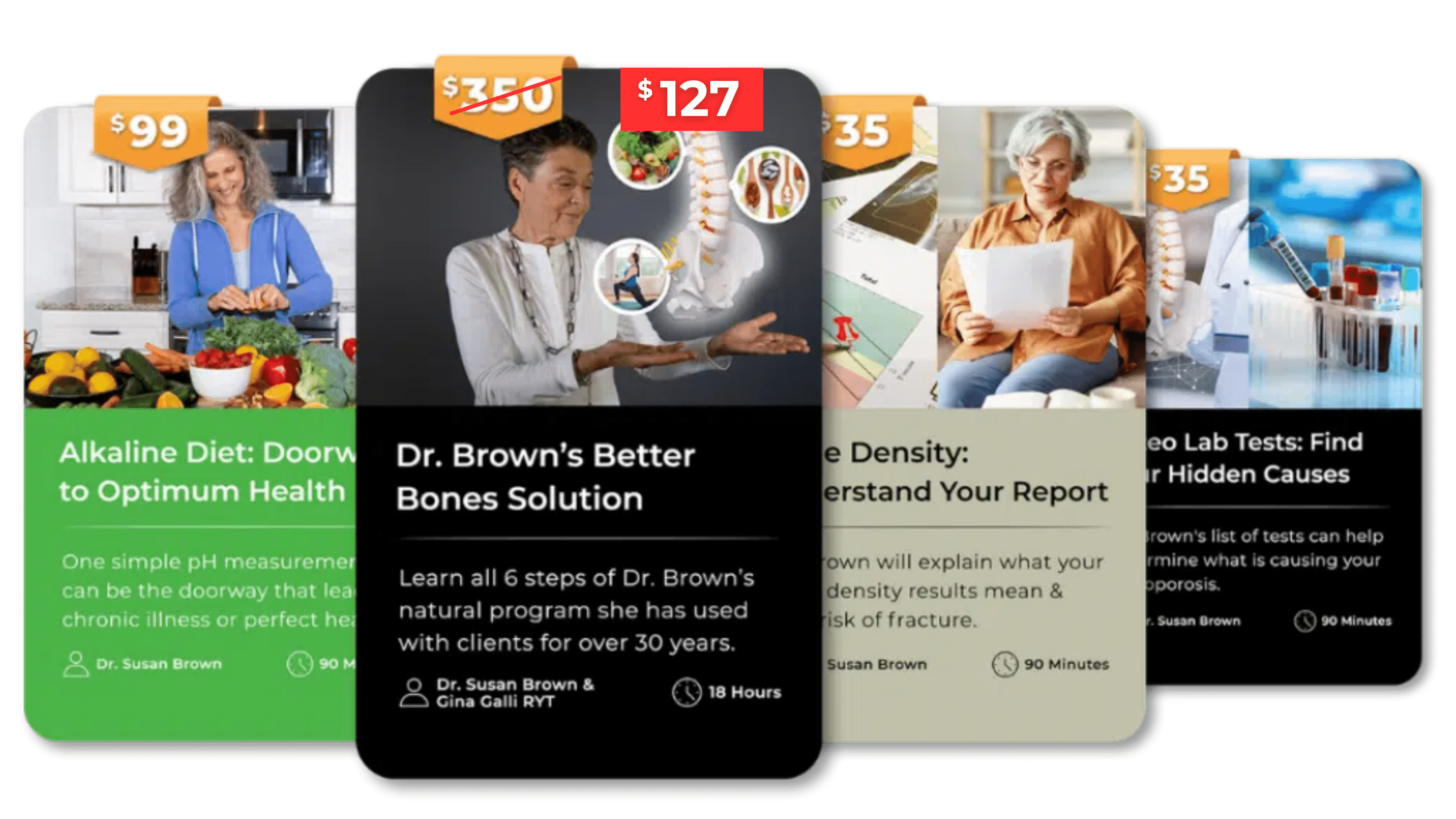
If you’re serious about rebuilding bone naturally, this nutrient blueprint is one of the most important places to start—but it’s even more effective when you understand how to put all the pieces together. Inside Dr. Brown’s Better Bones Solution, you’ll learn how to use these nutrients within her complete 6-step system for natural bone support.
- Understand the root causes of bone loss
- Learn how to personalize your bone-building nutrition plan
- Improve digestion, alkalinity, exercise, and lifestyle factors
- Build a practical, sustainable plan for stronger bones
Ready to Build a Smarter Supplement Routine?
Explore Dr. Brown’s Complete Bone Supplement Guide for clear, expert recommendations on the most effective bone-building nutrients and how to combine them.
Bone Health Goals Inquiry
Let us know which supplements interest you and a little about your current routine. A member of our team will reach out to help you build a personalized plan.