If you’re researching the best zinc for osteoporosis, you’ve identified one of the most under-appreciated minerals in bone health. Most women — and almost everyone over 60 — quietly run low on zinc, and the consequences for bone are direct and significant: weaker collagen, slower healing, less efficient calcium absorption, and reduced bone-building cell activity.
In this guide, Dr. Susan Brown — author of Better Bones, Better Body and developer of the Better Bones Solution — walks you through what zinc actually does for bone, which form to take, how much, and why pairing it correctly with copper is essential.
Zinc Is a Collagen Matrix Builder — The “Finish Carpenter” of Your Skeleton
In Dr. Brown’s 20 Key Bone-Building Nutrients framework, nutrients work together across four cooperating systems. Zinc belongs to the Collagen Matrix Builders — the crew that constructs the flexible protein scaffolding that gives bone its tensile strength.
Think of your bone as a house. Calcium and phosphorus are the bricks and concrete. Protein and collagen are the lumber. Vitamin C is the framing carpenter. Zinc is the finish carpenter — the one who joins, fastens, and sets the structure so it actually holds together. Zinc is required for collagen synthesis itself, for the activity of alkaline phosphatase (the key enzyme of bone-building osteoblasts), and for the breakdown and recycling of old bone protein. Without enough zinc, the entire matrix-building operation slows down.
Dr. Brown’s therapeutic target for zinc is roughly 15–25 mg per day for women supporting bone health, balanced with 1.5–3 mg of copper to prevent deficiency in that paired nutrient.
What Zinc Actually Does for Your Bones
In bone metabolism, zinc is needed to produce the matrix of collagen protein threads upon which the bone-forming calcium–phosphorus compound is deposited. It’s also necessary for the production of enzymes that degrade and recycle worn-out bits of bone protein. Proper calcium absorption also depends on zinc, and a deficiency prevents full absorption of calcium. It’s essential for bone healing, and increased amounts are found at the sites of bone repair. Low levels in the body have been closely linked with osteoporosis.
It’s unfortunate that in the face of declining intake and growing deficiencies of zinc in the American diet, authorities have seen fit to lower zinc requirements. Mild — but still clinically significant — zinc deficiency is widespread and far-reaching in its effects. The 2–3 grams of zinc found in the body act as a co-factor in over 200 enzymatic reactions that are instrumental in maintaining not just the health of our bones, but for optimal system-wide functioning.
Why Women Over 50 Are Especially Vulnerable to Zinc Deficiency
Several factors converge to make low zinc common in midlife and beyond:
- Declining stomach acid with age reduces zinc absorption from food
- Plant-heavy diets can be rich in phytates that bind zinc and reduce bioavailability
- Chronic stress increases urinary zinc loss
- Long-term acid-blocking medications (PPIs, H2 blockers) significantly reduce zinc uptake
- High-calcium supplements taken alone can compete with zinc absorption
The result is a slow, silent decline that shows up not as overt deficiency but as poor wound healing, reduced taste and smell, more frequent infections — and weaker bones.
Best Zinc for Osteoporosis: Which Form Should You Take?
Not all zinc supplements are absorbed equally. Here’s how Dr. Brown ranks them for bone health.
1. Zinc Citrate
Good absorption, neutral on the gut. Dr. Brown’s top pick for daily bone-support dosing
2. Zinc Picolinate
Bound to picolinic acid, also very well absorbed. A close second to bisglycinate and widely available.
3. Zinc Glycinate (Zinc Glycinate Chelate)
Zinc bound to two glycine molecules — extremely well absorbed, exceptionally gentle on the stomach, and one of the best-tolerated forms at therapeutic doses.
4. Zinc Gluconate
The most common over-the-counter form. Adequate absorption, inexpensive, but more likely to cause nausea on an empty stomach.
5. Zinc Oxide — Avoid for Bone Support
Cheap and widely used in multivitamins, but very poorly absorbed. If your label only says “zinc oxide,” it’s probably not delivering a meaningful dose.
Look for a copper-balanced formula. Many quality bone-support products combine zinc with a small dose of copper (typically a 10:1 to 15:1 zinc-to-copper ratio) so you don’t accidentally drive down copper, which is its own essential bone nutrient.
How Much Zinc Do You Need for Healthy Bones?
The federal RDA for zinc is 8 mg/day for women and 11 mg/day for men — levels Dr. Brown considers a bare minimum to prevent overt deficiency, not enough to actively support bone-building.
- Baseline wellness: 10–15 mg/day
- Active bone-building / postmenopausal women: 15–25 mg/day, with food
- Short-term (weeks) for healing or illness: Up to 30–40 mg/day under practitioner guidance
Critical warning on long-term high doses: Taking more than ~40 mg/day of zinc for extended periods can deplete copper and impair iron metabolism. Stay within Dr. Brown’s recommended range, and always pair higher zinc doses with copper.
Timing: Take zinc with food to minimize nausea. Avoid taking it at the same time as a high-dose calcium supplement (they compete for absorption) — separate by 2 hours if you can.
Get the Right Zinc — Properly Balanced With Copper
Dr. Brown’s Complete Bone Supplement Guide walks you through the exact zinc forms, dosages, and copper ratios she recommends — plus the rest of the matrix-building crew your bones need.
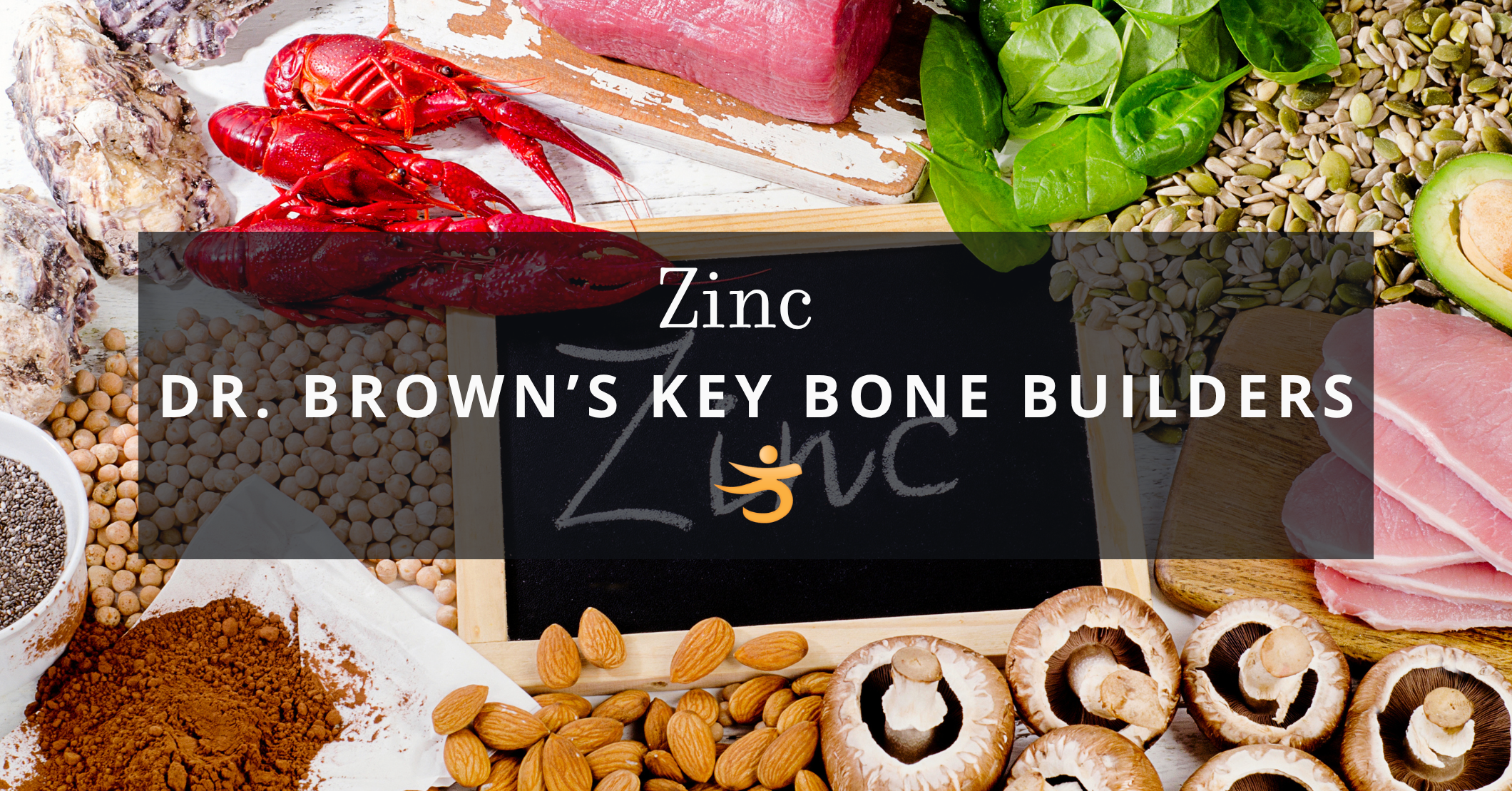
Best Food Sources of Zinc
As always, food first. The most concentrated sources are animal-based — which is part of why women on long-term plant-only diets need to pay particular attention to zinc.
- Oysters — by far the richest source on the planet (about 32 mg per 3-oz serving)
- Beef and lamb — especially grass-fed (4–7 mg per 3-oz serving)
- Pumpkin seeds (pepitas) — the best plant source (about 2 mg per ounce)
- Cashews and almonds
- Lentils, chickpeas, and other legumes (soak or sprout to reduce phytates)
- Hard cheeses like Swiss and cheddar
- Eggs, especially yolks
- Whole grains like oats and quinoa (again, soaking helps)
Zinc Works Best With Its Partner Nutrients
Because zinc is part of the Collagen Matrix Builders crew, it works hand-in-hand with the rest of the team:
- Vitamin C — partners with zinc in collagen synthesis and cross-linking
- Copper — must be supplemented alongside zinc to prevent imbalance
- Manganese — needed for proteoglycan synthesis in the matrix
- Silicon — bridges collagen and the mineralization interface
- Protein and collagen peptides — the raw building blocks zinc helps assemble
Putting It All Together
Zinc is a small mineral with an outsized impact on bone. Get 15–25 mg per day from the right supplemental form, balance it with copper, eat zinc-rich whole foods, and combine it with the rest of the Collagen Matrix Builders — and you give your body the tools it needs to build and maintain a strong, flexible skeleton at any age.
Read our evidence-based review of science-backed supplements for stronger bones.
Ready to Build Stronger Bones — for Life?
Dr. Brown’s Better Bones Solution teaches her complete 6-step protocol for lifelong strong bones — the same program she has used with thousands of women to stop bone loss and build new bone naturally.
Related Reading From Better Bones
- The 20 Key Bone-Building Nutrients: Complete Overview
- Best Vitamin C for Osteoporosis
- Best Collagen for Osteoporosis
- Best Protein for Osteoporosis
- Best Calcium for Osteoporosis
- Best Magnesium for Osteoporosis
- How to Speed Bone Healing After a Fracture
- Essential Nutrients for Building Better Bones
- Science-Backed Supplements for Stronger Bones
Scientific References
- Yamaguchi M. Role of nutritional zinc in the prevention of osteoporosis. Mol Cell Biochem. 2010;338(1-2):241-254. PubMed
- Hyun TH, Barrett-Connor E, Milne DB. Zinc intakes and plasma concentrations in men with osteoporosis: the Rancho Bernardo Study. Am J Clin Nutr. 2004;80(3):715-721. PubMed
- Ceylan MN, Akdas S, Yazihan N. Is Zinc an Important Trace Element on Bone-Related Diseases and Complications? A Meta-analysis and Systematic Review from Serum Level, Dietary Intake, and Supplementation Aspects. Biol Trace Elem Res. 2021;199(2):535-549. PubMed
- Saltman PD, Strause LG. The role of trace minerals in osteoporosis. J Am Coll Nutr. 1993;12(4):384-389. PubMed
- National Institutes of Health, Office of Dietary Supplements. Zinc — Health Professional Fact Sheet. ods.od.nih.gov